

When people say “veneers,” they usually picture porcelain, but composite veneers are a real, distinct option too, and understanding the difference between the two materials can help you have a more informed conversation at your consultation.
What Are Porcelain Veneers?
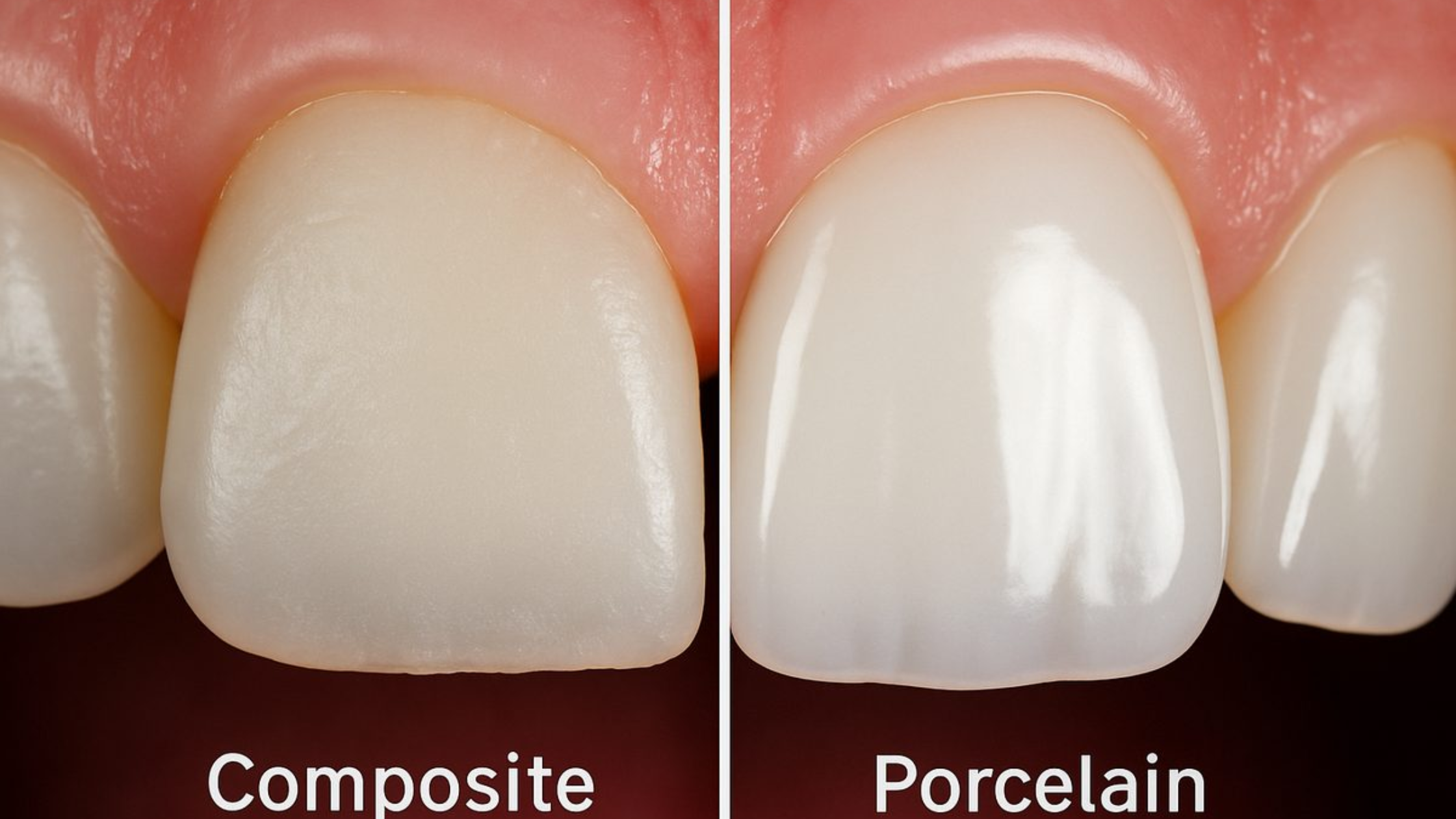
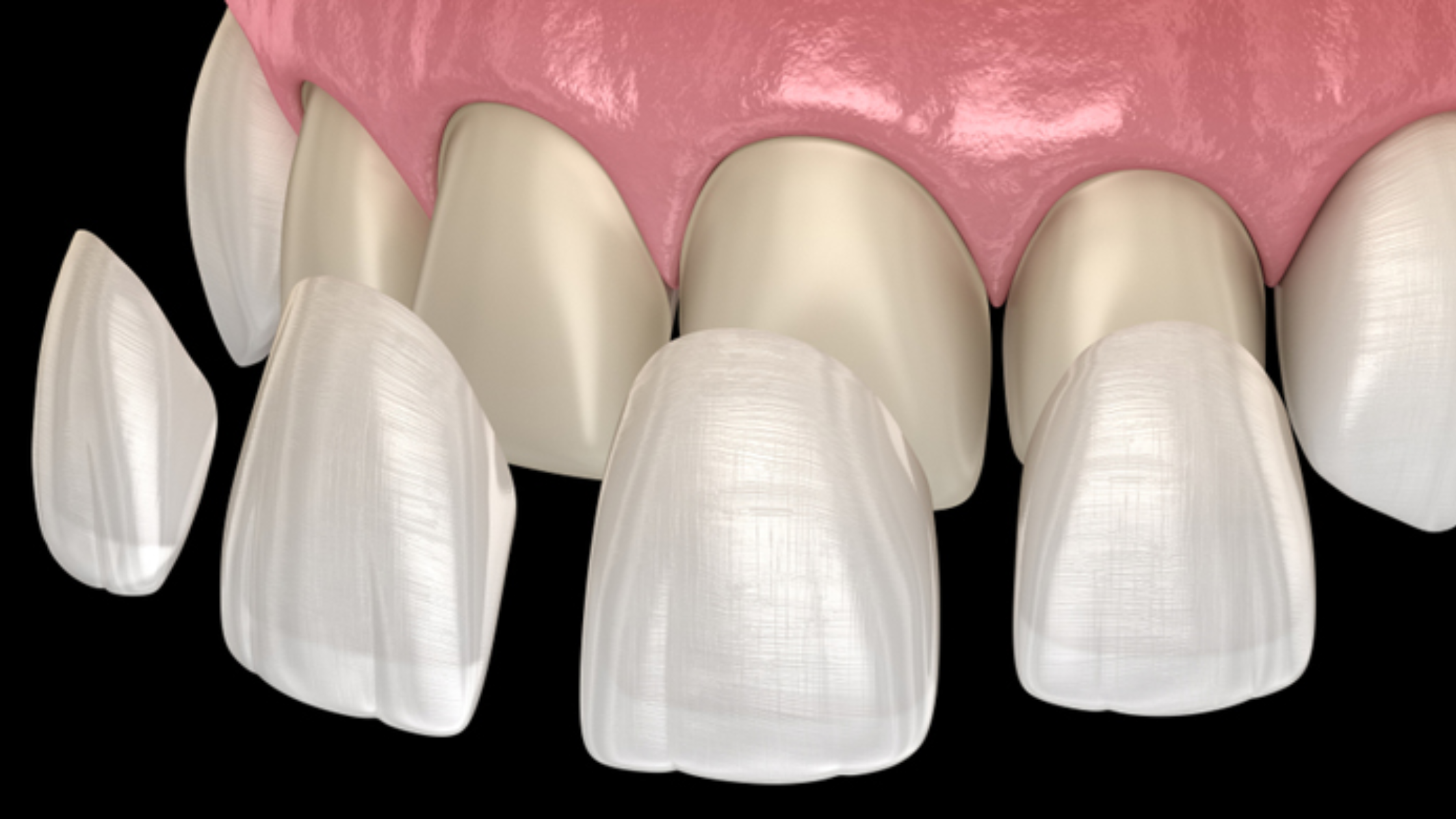
Porcelain veneers are thin shells fabricated by a dental lab based on impressions or digital scans of your teeth. Because they’re custom-made outside the mouth and then bonded into place, the process typically takes place over two or more visits, with a period of a few weeks in between while the lab creates your veneers. Learn more about what a porcelain veneers consultation involves.
Generally known for:
- Strong resistance to staining over time
- A translucent, natural-looking appearance that mimics real enamel
- Longer typical lifespan with proper care compared to composite
What Are Composite Veneers?
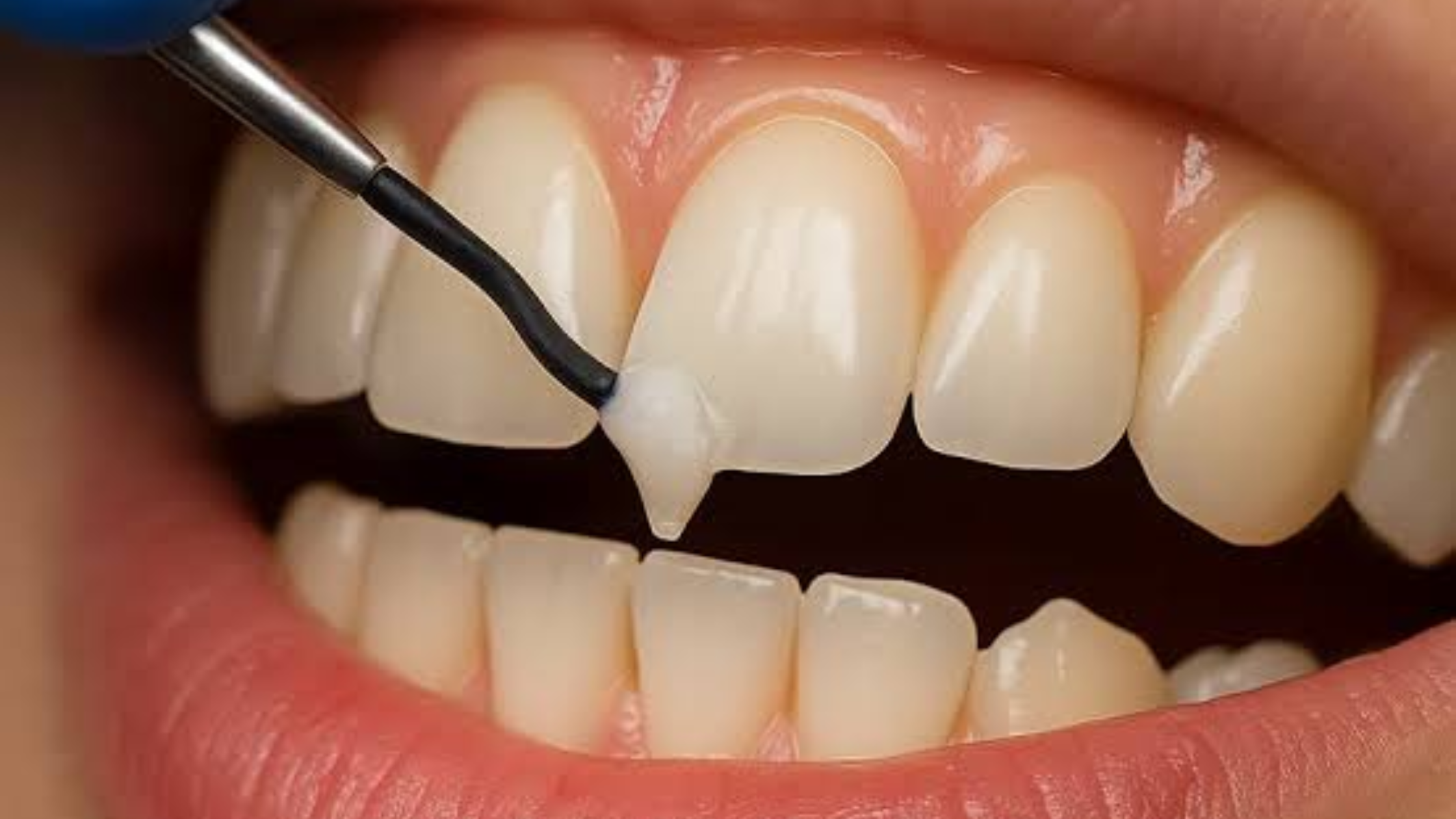
Composite veneers use the same tooth-colored resin material as dental bonding, applied and shaped directly onto the tooth by your dentist in a single visit, rather than fabricated in a lab. In practice, a “composite veneer” and dental bonding used to cover the full front surface of a tooth are very similar procedures; the terminology sometimes overlaps depending on how much of the tooth is being covered.
Generally known for:
- Same-day completion, without lab fabrication time
- Lower relative cost compared to porcelain
- Easier, generally more affordable touch-ups and repairs if damage occurs
- More prone to staining over time than porcelain
Side-by-Side Comparison
| Porcelain Veneers | Composite Veneers | |
| Fabrication | Custom-made in a dental lab | Shaped directly onto the tooth, chairside |
| Visits required | Typically two or more | Usually one |
| Stain resistance | Higher | Lower, more prone to picking up stains over time |
| Typical longevity | Generally longer-lasting with care | Generally shorter-lived, but easier to repair or touch up |
| Tooth preparation | Small amount of enamel removed (traditional) | Minimal to none |
| Relative cost | Higher, reflecting lab fabrication | Lower |
| Repairability | If damaged, often requires full replacement of the shell | Can typically be touched up or repaired directly |
What About “No-Prep” Veneers?
Some patients ask specifically about no-prep or minimal-prep veneer systems, which are porcelain veneers designed to require little to no enamel removal. Whether this option is appropriate depends on the individual tooth; some teeth have enough natural space and shape to accommodate a no-prep veneer, while others don’t, and adding a veneer without any preparation on a tooth that isn’t suited for it can result in a bulkier, less natural-looking outcome. This is a case-by-case clinical decision best made during your consultation.
Which Should You Choose?
Composite may make more sense if:
- You want a same-day result without a lab-fabrication waiting period
- Your budget favors a lower-cost option
- You’re treating a smaller concern, like a single tooth
- You’re comfortable with more frequent touch-ups over time
Porcelain may make more sense if:
- You’re planning a more significant or coordinated change across several teeth
- Long-term stain resistance and durability matter more to you than upfront cost
- You want the most natural-looking translucency porcelain offers
- You’re comfortable with a multi-visit process in exchange for a longer-lasting result
There’s also a middle path worth knowing about: some patients start with composite to test out a new tooth shape or length before committing to porcelain, using the more affordable, reversible option as a preview before investing in the longer-term one. Whether that approach makes sense for you is worth discussing directly with your dentist.
Frequently Asked Questions
Can I switch from composite to porcelain veneers later? Often, yes. Composite is generally considered the more conservative starting point, and many patients who like the change move to porcelain for a longer-lasting version of the same result.
Do composite veneers look as natural as porcelain? Composite can look quite natural when well done, though porcelain’s translucency more closely mimics natural enamel, especially over time as composite is more prone to picking up surface stains.
How long do composite veneers typically last? This varies by individual habits and care, but composite is generally understood to have a shorter lifespan than porcelain before needing touch-ups or replacement.
Is one material safer than the other? Both are standard, widely used dental materials. The differences between them are primarily about durability, appearance over time, and cost, not safety.
Can porcelain and composite veneers be used together in the same smile? It’s possible, depending on the specific goals for each tooth, though many dentists prefer a consistent material across visibly adjacent teeth for the most uniform look. This is worth discussing at your consultation.
Talk Through Your Options
The right material depends on your goals, timeline, and budget. Schedule a consultation at Steele Creek Smiles or call (704) 587-1010 to find out which fits you.
This article is for general educational purposes and isn’t a substitute for an in-person dental evaluation.